5 new AI business ideas from this week's trends
Daily ideas for November 3, 2026 (America/New_York). Part of our daily series that started with 13 creative AI business ideas from trends. See all days on the guides page.
Ideas, not verified income stories. Each idea is our own speculation built on linked sources, and none is a promise of income. One link marked affiliate may earn us a commission. More about these ideas.
Today's ideas
- "See it before you pay" AI website drafts for businesses with no site
- Hands-on tested gift guides for AI-assisted holiday shoppers
- "Made by a person" proof kits for makers, illustrators and writers
- Holiday "comment a keyword, get the link" DM setups for small shops
- "Ask your business" setup: official AI connectors for booking and shop owners
1. "See it before you pay" AI website drafts for businesses with no site (speculative)
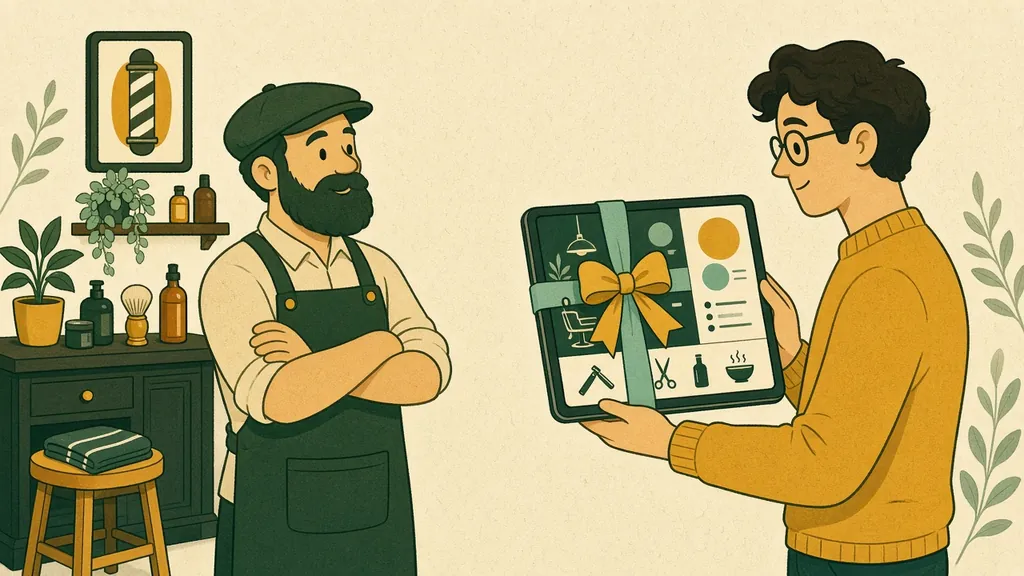
What the source says: AI Sites Ireland launched a service where a small business fills in a short form, sends its photos, and AI software writes and designs the site, with a person then making edits. The owner sees a free draft before committing or paying; a one-page site is a fixed €249 and up to five pages €349 (excluding VAT), with a domain, contact form and two rounds of changes included, and hosting at €156 a year. Separately, Shopify says this is the first holiday season agentic shopping goes mainstream and that "the test that matters is legibility": whether an AI agent can understand what you sell and whether your brand can be trusted.
Sources: Business Plus: AI Sites Ireland uses software to produce business websites (Nov 3, 2026) · Shopify: Welcome to the first holiday season of the agentic era
Our idea (speculation): The interesting part is not the AI, it is the sales model: build the draft first, show it, and only then ask for money. With AI site builders, a draft for a real local business takes an evening, so you can walk into a food truck, a piano teacher or a handyman with no website and show them their own site already working. Add the part AI shoppers and assistants need: clear services, prices, hours and area served in plain text, not just in a photo. Charge a flat build fee and a small yearly hosting and update fee.
Who pays: Local businesses that only have a Facebook page or nothing at all: food trucks, tutors, cleaners, handymen, home bakers, small churches and clubs.
Start it this weekend: Pick three local businesses with no website (search Google Maps for listings without a site link). Build a one-page draft for each with an AI site builder such as Lovable, Wix or Squarespace, using only public info and photos they already posted. Send each owner a private preview link with a short note and a flat price. Check each tool's current pricing and hosting terms before quoting.
What could go wrong: Using an owner's photos or logo without permission, even in a draft, can upset people: keep drafts private and ask before going live. Some owners will say no after seeing a free draft, so cap your time per draft. Cheap competitors exist, so your value is the local visit and the follow-up updates.
Could earn: Soon (weeks)
2. Hands-on tested gift guides for AI-assisted holiday shoppers (speculative)

What the source says: Affiverse reports Rakuten Advertising's November 2 research update found only 38% of surveyed consumers would be comfortable with an entirely AI-generated creator review, and it cites separate IAB research where 65% of recent AI-shopping users felt more confident when credible creator reviews informed recommendations. Shopify's 2026 Global Holiday Retail Report says 65% of shoppers will use AI for at least one shopping task this season and 71% of regular AI users are more likely to choose an indie brand than last year. A roundup by Greater Than Services cites a Gartner finding that 54% of AI shoppers said they had to double-check everything the tools told them.
Sources: Affiverse: Rakuten research examines AI disclosure and creator trust (Nov 3, 2026) · Shopify: Welcome to the first holiday season of the agentic era · Greater Than Services: AI holiday shopping 2026 survey numbers (compiles Deloitte, Adobe and Gartner figures)
Our idea (speculation): Shoppers are asking AI for gift ideas and then double-checking, and they trust real human testing more than AI-written reviews. That makes a small, honest gift guide valuable again: one narrow niche (homeschool families, toddler grandparents, RV travelers, home bakers), every item actually used by you, with photos, what you did not like, and the price on the day you checked. Publish it as a free newsletter and web page that AI tools can read and cite. Money can come from disclosed affiliate links and, later, from indie brands paying a flat, clearly labeled fee to be tested (never to be praised).
Who pays: Affiliate programs (Amazon, brand programs) per sale, indie brands for disclosed sponsored testing slots, and later newsletter sponsors.
Start it this weekend: Pick a niche you already live in. Gather 10 items you own and like, photograph them in use, and write two honest sentences each, including one downside. Publish a free newsletter with beehiiv or Kit and a matching blog page, with an affiliate disclosure at the top. Share it in two groups you already belong to, following each group's rules on links.
Try beehiiv for the gift-guide newsletteraffiliate
What could go wrong: Affiliate income from gift guides is often small and seasonal, and Rakuten's numbers are stated attitudes, not sales. Recommending items you never touched destroys the whole point and may break FTC endorsement rules; disclose every paid link and sponsored test. Prices change daily, so date them.
Could earn: Soon (weeks, but mostly this season)
3. "Made by a person" proof kits for makers, illustrators and writers (speculative)

What the source says: In Korea, XO Communications beta-opened Thezle, a commission platform for illustration, writing, crafts, design and sound with an "Anti-AI" policy: a detection system for AI-generated works and an "AI nonuse certification system." Creative AI News reviewed 12 studies and reports that 97% of 9,000 listeners in an Ipsos test for Deezer could not tell fully AI songs from human ones, yet across 16 experiments people rated the same writing lower once they believed AI wrote it. Wysera, launching an AI writing agent on November 1, said generated content has become cheap and abundant while getting less effective as buyers and search engines get better at recognizing copy no human wrote.
Sources: Chosunbiz: XO Communications launches Thezle with AI detection and human-made certification (Nov 3, 2026) · Creative AI News: Do audiences care if you use AI? (Nov 2, 2026) · Newsfile: Wysera launches an AI agent that writes in a company's own voice (Nov 1, 2026)
Our idea (speculation): If buyers cannot tell AI work from human work by looking, but care once they know, then proof of process becomes something people will pay for. A "made by a person" kit helps a maker show it: a simple routine for filming time-lapses and work-in-progress shots, a dated sketch or draft archive, a short process page and a plain "how I use (or do not use) AI" statement for their shop. You set it up once and then edit their process clips into posts monthly. Ironically, you can use AI to edit and caption the proof, as long as you say so.
Who pays: Etsy and craft-fair sellers, illustrators taking commissions, portrait artists, calligraphers and freelance writers who are losing jobs to "you probably used AI" doubts.
Start it this weekend: Pick one maker friend. Set up a phone on a cheap stand for time-lapse while they work, collect three drafts or sketches, and write a one-page process statement together in Google Docs. Edit the footage into a 30-second Reel with CapCut. Turn the steps into a checklist and offer it to five makers for a small setup fee.
What could go wrong: No kit can prove a negative, and AI detectors are known to make mistakes, so never promise "certified AI-free." Some makers do use AI for parts of their work: the statement must be honest, not a marketing claim. The demand comes from studies of attitudes, not purchase data.
Could earn: Medium (1 to 6 months)
4. Holiday "comment a keyword, get the link" DM setups for small shops (speculative)
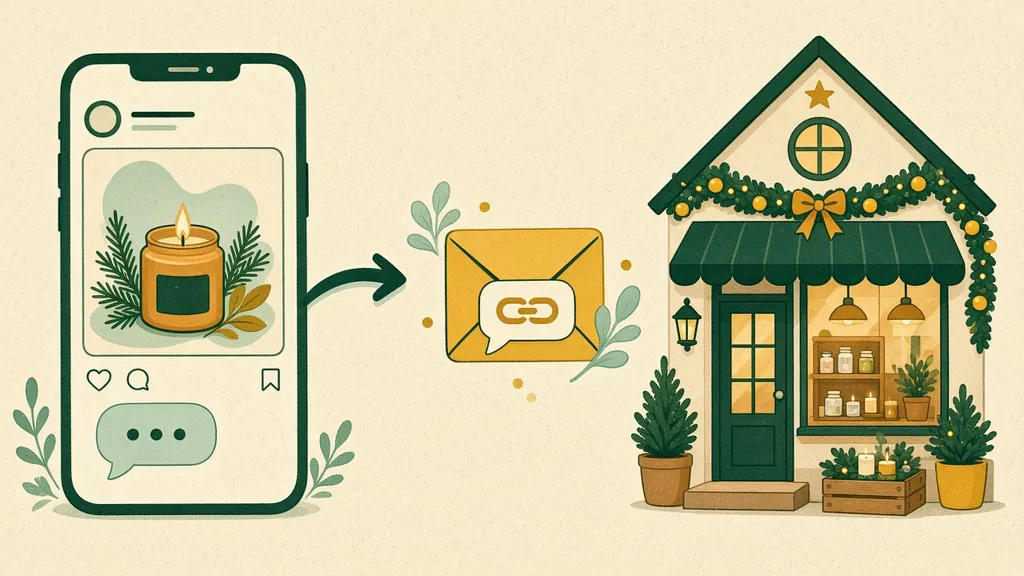
What the source says: Metricool launched Flows, which turns social engagement into leads and sales: on Instagram, comments, DMs or Story replies can trigger automatic responses such as sending a product link when someone comments a chosen keyword, plus automated comment replies and moderation on TikTok. Metricool also added an official connector for Claude and ChatGPT that is available on all plans, including free. Narvar's holiday report says 58% of shoppers plan to start holiday shopping earlier this year while 77% of retailers have no plans to incentivize early shopping.
Sources: IT Brief: team.blue launches AI connectors across software brands, including Metricool Flows (Nov 3, 2026) · Narvar: Delivering the 2026 holiday shopping season report
Our idea (speculation): Keyword-to-DM funnels ("comment GIFT and I will send you the list") used to be a big-creator trick; now they are built into the scheduling tools small shops already use. Most boutiques, bakeries and craft sellers will not set them up in time for the holidays. Sell a fixed-price "holiday DM setup": pick three posts, write the keyword flows, the auto-replies and an early-bird offer, connect the links, test them, and check in weekly through December. It pairs naturally with Narvar's finding that shoppers start earlier than shops plan for.
Who pays: Small retail and food businesses with an active Instagram but no automation: boutiques, bakeries, candle and soap makers, local gift shops.
Start it this weekend: Set up one keyword flow on your own Instagram with Metricool Flows or a similar tool such as ManyChat, and test it with a friend's account. Write three ready-to-use flows (gift list, pre-order, early-bird code). Check each tool's current plan and Instagram's messaging rules, then offer two local shops a launch-week setup.
What could go wrong: Instagram limits automated messaging and can change rules, so follow the tool's official integration and never use login-sharing bots. Spammy replies hurt a brand; keep messages short and opt-in. Results depend on the shop's audience, so do not promise sales.
Could earn: Soon (weeks, before Black Friday)
5. "Ask your business" setup: official AI connectors for booking and shop owners (speculative)
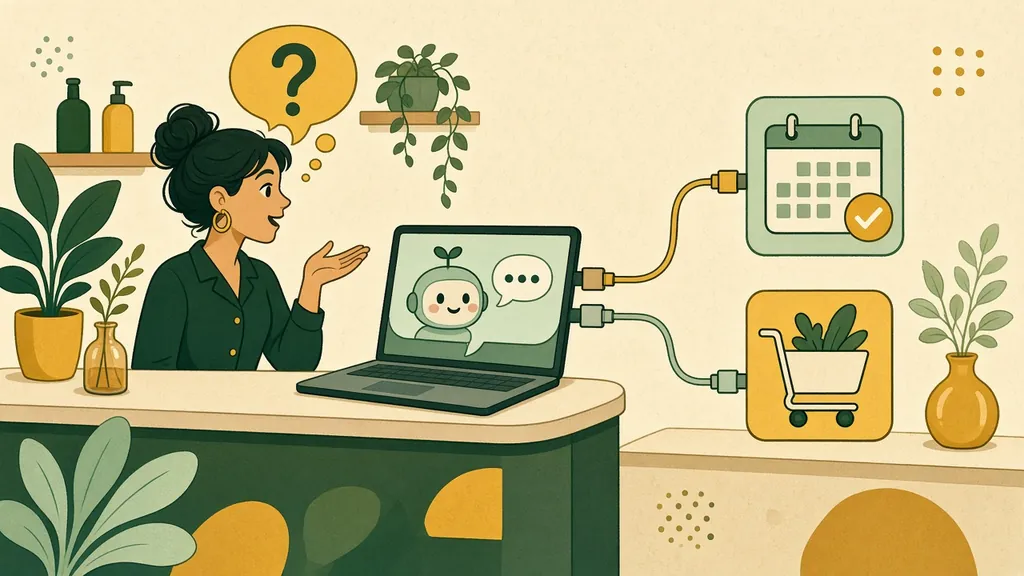
What the source says: team.blue launched connectors that let small businesses use their data inside Claude, ChatGPT and other assistants: SimplyBook.me's connector can show tomorrow's schedule, find open dates, book a client with a named provider or list clients with unpaid balances; Shoptet's lets a merchant ask which orders are unpaid or which products are low on stock and take actions like changing an order status or creating coupons, with the owner choosing which tools the assistant may use. team.blue's own report found only 25.1% of businesses say their tools are fully or mostly integrated. BCG found 42% of retailers it surveyed make their data discoverable by any AI agent and 32% only by chosen agents.
Sources: IT Brief: team.blue launches AI connectors for Claude, ChatGPT and other assistants (Nov 3, 2026) · BCG: How retailers can win with AI shopping agents in 2026
Our idea (speculation): Software companies are shipping official connectors, but a salon owner or yoga studio will not know they exist, which permissions to allow, or what to ask. A one-session setup does three things: connect only the official connectors for the tools they already pay for, set permissions to "read" first, and leave them with a printed card of ten useful questions ("who has not paid?", "what is open Friday?", "what is almost out of stock?"). Follow up a month later to turn on carefully chosen actions. This is setup and teaching, not building software.
Who pays: Owners of salons, studios, tutoring centers and small online stores who already pay for booking or e-commerce software and an AI assistant subscription.
Start it this weekend: List the booking, store and social tools popular in your town and check which ones now offer an official connector for ChatGPT or Claude. Connect one to a demo or your own account, write the ten-question card, and note every permission screen. Offer the session to three owners for a flat fee.
What could go wrong: Connected assistants can take real actions (booking, coupons, order changes), so a wrong click costs money: start read-only and get written permission. Connector availability varies by country and plan; team.blue's brands are mostly European. Never collect a client's passwords; they sign in themselves.
Could earn: Soon to medium (weeks to 3 months)
The thread connecting today's five
Our take: this week's news points two ways at once. AI makes websites, content and shop automation cheap and fast (AI Sites Ireland, team.blue's connectors), while buyers trust human testing and human-made work more once they know (Rakuten via Affiverse, Creative AI News). The opening is in the middle: use AI to do the work fast, and sell the human part, the visit, the test, the proof and the careful setup.
Yesterday's five: 5 new AI business ideas (Nov 2, 2026).
Want proof instead of ideas? Read our verified stories of people who actually got paid with AI, and how we verify them. More ideas: the original 13 AI business ideas from trends and 14 ways to start an AI business with ElevenLabs.