5 new AI business ideas for families, churches and tradespeople
Daily ideas for November 11, 2026 (America/New_York). Part of our daily series that started with 13 creative AI business ideas from trends. See all days on the Ideas hub.
Today's five start with people, not headlines: a family recipe box, a nervous pet owner, a long holiday drive, a small church and a busy contractor. Two are fun beginner projects you can try for nearly nothing this weekend. These are speculative ideas, not promises of income; one affiliate link is disclosed below. More about these ideas.
Today's ideas
- Grandma's recipe box, turned into a printed family cookbook (a fun beginner project)
- "Talk it, print it" pet-sitter handbooks made from a five-minute voice memo (a fun beginner project)
- Route-matched road-trip audio games for families, built around the towns on their actual drive
- "Sunday to small group" weekly discussion guides made from a church's own sermon or homily
- "This week on your job" photo-and-plain-English client updates for small remodelers and handymen
1. Grandma's recipe box, turned into a printed family cookbook (a fun beginner project) (speculative)
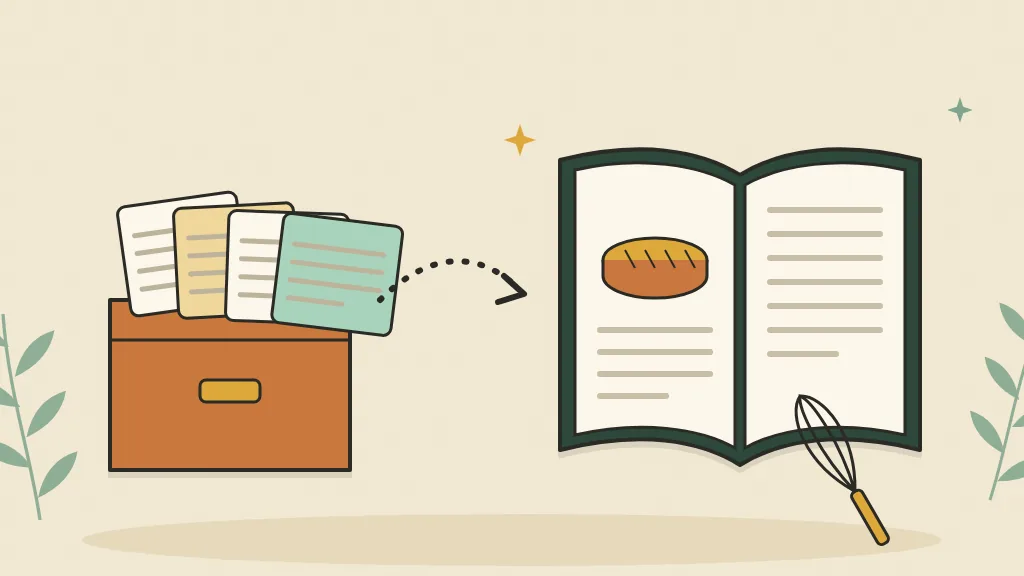
Why now: Photo-book printers already sell recipe-book layouts: Mixbook has dedicated cookbook themes and says you can add "scanned copies of handwritten recipe cards," with printing starting at $14.99. Blurb's price list shows an 8 x 10 inch standard-color ImageWrap hardcover at $22.99, plus $0.17 per extra page (prices before shipping and tax, as listed when we checked on Nov 11, 2026). What the printers don't do is the slow part: reading faded handwriting, typing it up and turning "a pinch" and "bake till done" into something a grandchild can follow.
Sources: Mixbook: Custom Family Recipe Cookbooks · Blurb: pricing and shipping calculator
Our idea (speculation): Offer a "recipe box to cookbook" service. A family hands you (or photographs for you) a box of handwritten cards. Free ChatGPT or Gemini reads each photo and types a first draft; you check every word against the card, ask the cook to fill gaps ("how long is 'till done'?"), and lay out one page per recipe with the scan of the original card beside the typed version. The family orders the printed copies themselves from Blurb or Mixbook, or you order for them at cost. It's a gift product: a book of "Nonna's Sunday sauce" in her own handwriting, for every grandchild.
Who pays: Adult children and grandchildren who want a holiday or milestone gift (a 90th birthday, a family reunion, a wedding shower), and church or club cooks who want a fundraiser cookbook.
Start it this weekend: Saturday: photograph ten of your own family's recipe cards in good daylight, paste each into free ChatGPT or Gemini and ask it to transcribe exactly, then fix every line by hand. Sunday: build the pages in Canva's free plan or Blurb's free BookWright app, one recipe per page with the card scan beside it, and order one proof copy. Show the proof to two friends and offer a flat price per recipe plus the printing cost. Tools: free ChatGPT or Gemini, Canva free or Blurb BookWright, about $23 and up for one hardcover proof.
What could go wrong: AI misreads handwriting, especially fractions and oven temperatures, and may "helpfully" change a recipe: compare every number to the card and have a family member sign off. Printing and shipping take time, so holiday orders need to be locked early (check each printer's current cutoff dates). Recipes copied from published cookbooks or magazine clippings belong to their authors; keep those out of anything sold to the public. Handle the original cards carefully or let families photograph them at home.
Could earn: Soon (seasonal)
2. "Talk it, print it" pet-sitter handbooks made from a five-minute voice memo (a fun beginner project) (speculative)
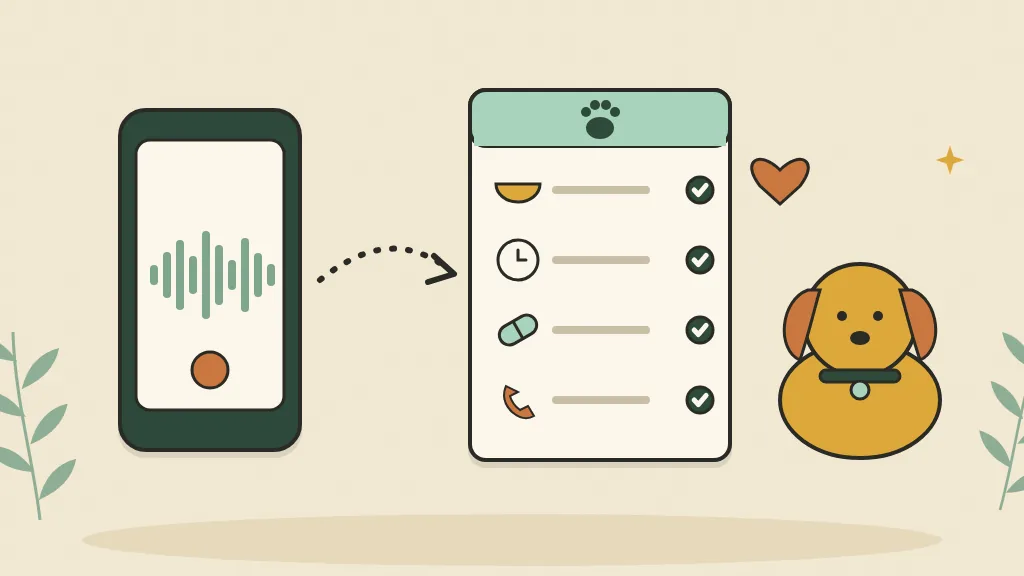
Why now: In a survey commissioned by MetLife Pet Insurance (1,000 U.S. pet owners, July 2025), 82% said they leave written care instructions or an emergency plan with a sitter. Among people who used pet-sitting platforms, 40% reported issues, and "sitters failing to follow instructions" was cited by 35% of them. The American Animal Hospital Association's checklist for a pet-sitter sheet runs long: personality and fears, meal amounts, medications and how to give them, walk routines, where the leash and litter are, the vet, the nearest 24-hour emergency clinic and a poison-control number.
Sources: MetLife Pet Insurance: The Pet Sitter Trust Index (survey of 1,000 U.S. pet owners, July 2025) · AAHA: Preparing for the Unexpected, Essential Pet Sitter Instructions
Our idea (speculation): Most owners already know all of this; they just never write it down well. You have them ramble into their phone for five minutes ("Biscuit gets half a cup at 7, he hides under the bed during storms, the leash is on the hook by the garage..."), then you turn the recording into a tidy, laminated one-page "house manual" for each pet plus a fridge emergency card, organized with AAHA's headings. Add a photo of each pet so sitters can't mix them up. Sell it to owners before holiday trips, or partner with a local groomer, trainer or independent pet sitter who hands it out as a perk.
Who pays: Pet owners heading out for Thanksgiving and Christmas travel (especially those with older pets on medication or several animals), and local independent pet sitters, groomers and dog walkers who want happier clients and fewer missed instructions.
Start it this weekend: Saturday: record your own (or a friend's) five-minute pet ramble, paste the transcript or audio into free ChatGPT or Gemini, and ask it to sort the facts under AAHA's headings without adding anything new. Make a pretty one-page template in Canva's free plan. Sunday: do two more for friends, print, and laminate (a home laminator costs little, or a print shop can do it). Then post a before-and-after in a local pet group. Tools: phone voice memo, free ChatGPT or Gemini, Canva free, home printer, $0 to start.
What could go wrong: The AI must not invent anything: no made-up doses, feeding amounts or vet numbers. Read every line back to the owner and have them check medicine instructions against the vet's label. You are not giving veterinary advice. Keep owners' addresses, door codes and alarm codes off the printed card (they can share those privately with the sitter). Demand is seasonal and price-sensitive, so keep it simple and cheap.
Could earn: Soon
3. Route-matched road-trip audio games for families, built around the towns on their actual drive (speculative)
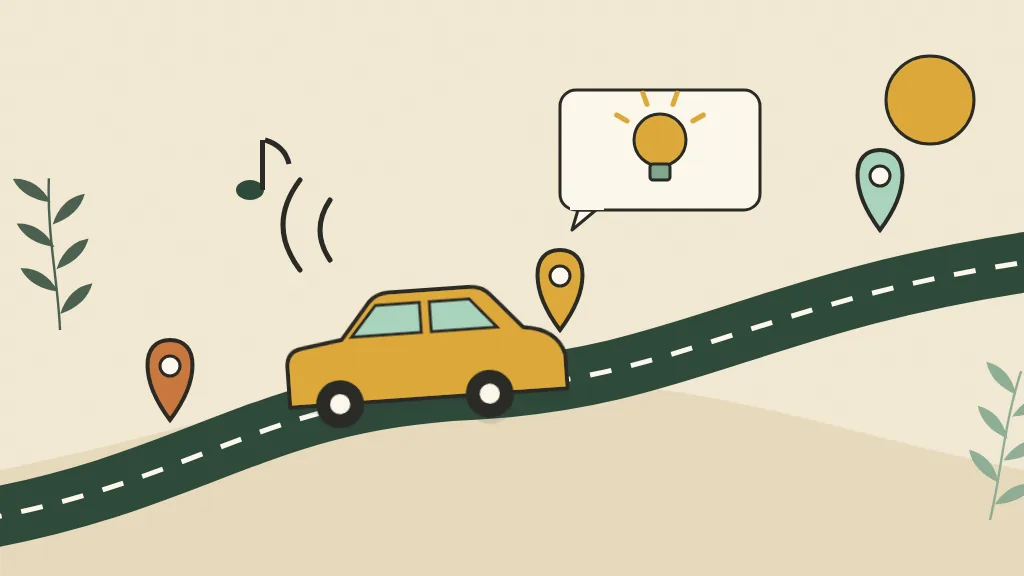
Why now: AAA's most recent Thanksgiving forecast, for 2025, projected 81.8 million people traveling at least 50 miles from home over the holiday period, with at least 73 million of them going by car, nearly 90 percent. (AAA had not published a 2026 forecast when we checked.) For the audio side, ElevenLabs' pricing page lists a free plan without a commercial license and a Starter plan at $6 a month (shown at $1 for the first month when we checked) that adds a commercial license and 30,000 credits a month; text to speech costs about 1 credit per character on its multilingual models.
Sources: AAA Newsroom: Thanksgiving travel forecast 2025 (Nov 17, 2025) · ElevenLabs pricing
Our idea (speculation): Families on long drives get generic trivia apps and podcasts. Make them an audio game about their drive: give you the start, end and stops, and you script a 60-to-90-minute track split into short segments, one for each stretch of road ("In about twenty minutes we cross a river that floated steamboats; first person to spot the bridge gets a point"), with riddles, would-you-rather questions, a family inside-joke round and a big finale as you pull into Grandma's street. You voice it with a warm narrator voice in ElevenLabs and deliver a playlist of MP3s the parent plays from their phone. A mashup of travel planning and kids' audio, priced per trip.
Who pays: Parents and grandparents driving 3 to 10 hours for the holidays, homeschool and roadschooling families on long trips, and RV owners; later, small tour operators or campgrounds who want a "drive in" audio tour for guests.
Start it this weekend: Saturday: map one drive you know in Google Maps, list 8 to 10 landmarks or towns along it, and draft the segments with free ChatGPT or Gemini. Check every fact against an official source (a state park page, the town's own website); cut anything you can't confirm. Sunday: generate the narration in ElevenLabs (free plan for testing; Starter at $6 a month once you sell, for the commercial license), export MP3s, and test it on a real drive or with the kids at the kitchen table. Offer the first trip to a friend at a small flat price. Tools: Google Maps, free ChatGPT or Gemini, ElevenLabs, $0 to $6 a month.
Try ElevenLabs for the narrator voiceaffiliate
What could go wrong: AI loves to invent local history: every "fun fact" must be checked or cut. Safety first: audio only, no screen tasks or games the driver has to look at, and segments should never tell anyone to do something on the road. Traffic changes timing, so make segments that work in any order or by mile marker, not exact minutes. Don't clone a family member's voice without their clear permission, and don't imitate famous voices or characters. It's seasonal and one-off, so think about bundles (there and back) or a printable car bingo add-on.
Could earn: Soon / Medium
4. "Sunday to small group" weekly discussion guides made from a church's own sermon or homily (speculative)
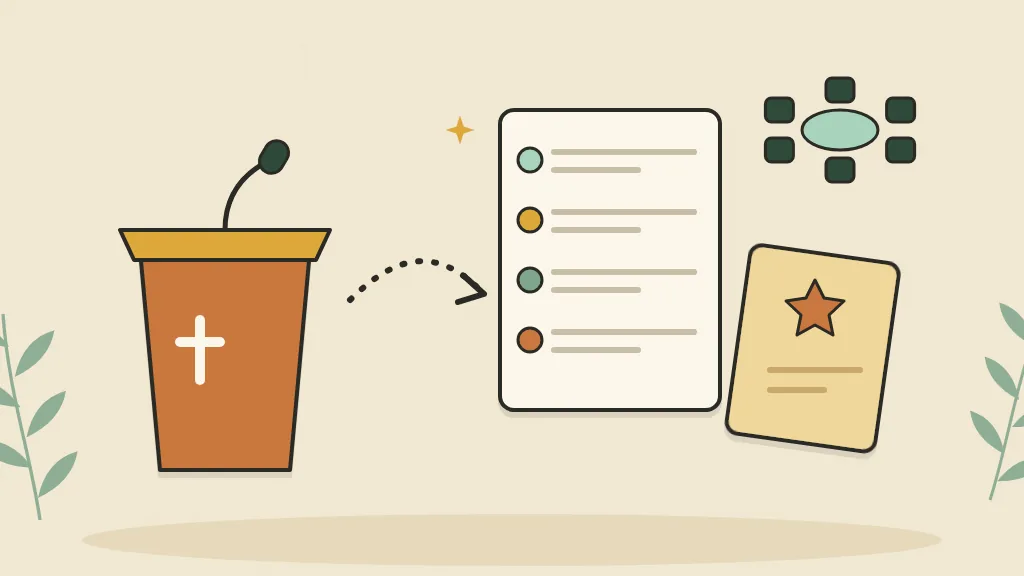
Why now: Lifeway Research reported in August 2026 that, in its State of Discipleship survey of 2,130 U.S. Protestant churchgoers, those who attend a small group Bible study three or more times a month had the highest discipleship scores. Lifeway has long recommended one-page, sermon-based discussion guides for small groups, and its own custom curriculum team has offered to write them for churches, which tells you churches are willing to pay for this kind of help. Big churches have staff for it; small ones usually don't.
Sources: Lifeway Research: Small Group Participation Linked to Higher Discipleship Scores (Aug 4, 2026) · Lifeway Research: 3 Ways to Get More Impact from Your Weekly Sermon (2014)
Our idea (speculation): Each Monday, take a small church's own Sunday sermon or homily (from its livestream or a recording the pastor sends), and deliver a one-page small-group guide by Tuesday: a short summary in the pastor's own words, the Scripture references, five discussion questions, one "try this week" action, and a matching kids' page for families or Sunday school. AI drafts it from the transcript; you edit, and the pastor approves every guide before it goes out. For Catholic parishes, the same format works for the Sunday readings and homily as a family faith-sharing sheet. Charge a flat monthly fee per church.
Who pays: Pastors of small churches, parish staff, small-group and youth leaders, and homeschool co-ops attached to a church, who want weekly material that matches what was actually preached.
Start it this weekend: Pick a church that posts sermons on YouTube (yours, ideally). Copy the auto-generated transcript, paste it into free ChatGPT, Claude or Gemini and ask for a guide in your fixed template using only what the preacher said. Rewrite the questions yourself, lay it out in Canva's free plan or Google Docs, and send a sample to the pastor with a plain offer: four weekly guides for a flat monthly price. Tools: YouTube transcript, free ChatGPT, Claude or Gemini, Canva free or Google Docs, $0.
What could go wrong: Getting theology wrong is the fastest way to lose a church: the AI must summarize, not add doctrine, and the pastor or a delegate approves every guide. Ask permission before using anyone's sermon and keep the church's branding and voice. Quote Bible translations within the publisher's permitted limits and name the translation. Churches have small budgets and long decisions, so expect a slow start and offer a free month.
Could earn: Medium
5. "This week on your job" photo-and-plain-English client updates for small remodelers and handymen (speculative)
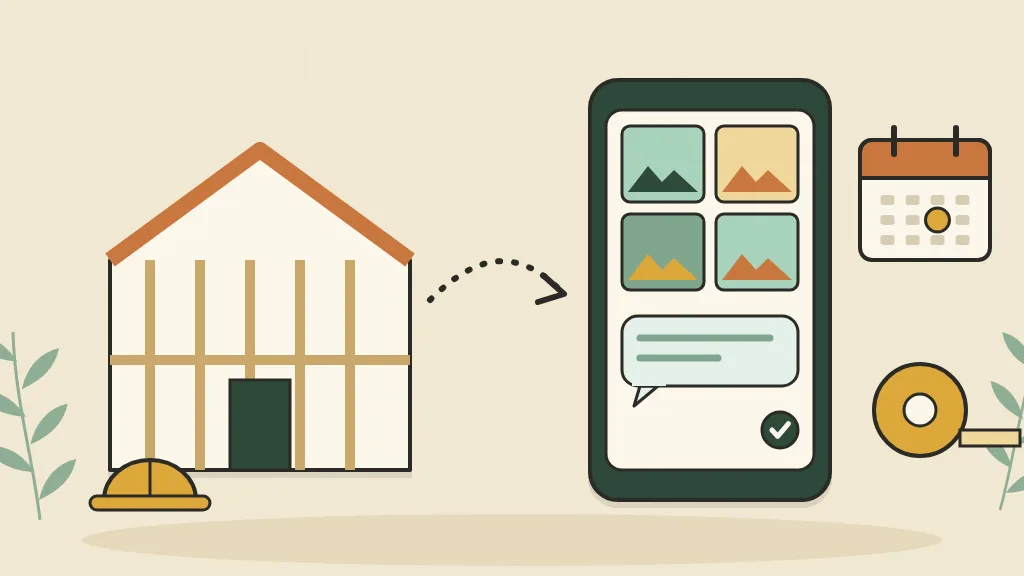
Why now: In a Houzz survey of U.S. users doing kitchen or bath renovations (fielded July 2024), 40% said they wished they had received better communication from the pros they hired, and 41% said a clear project timeline would have improved the experience. Houzz sells software for this, so treat its framing with that in mind. Modernize's 2025 homeowner report found the share who prefer a first contact by text rose from 19% in 2024 to 29% in 2025.
Sources: Houzz: What Homeowners Want During Home Renovation Projects (survey of 2,866 U.S. Houzz users) · Modernize: Homeowner Insights Report 2025 (PDF)
Our idea (speculation): Small remodelers and handymen do good work but hate writing updates at 7 p.m. Each Friday, the contractor sends you (or a shared album) the week's photos and a 60-second voice note. You turn it into a short, friendly update for the homeowner: what got done, what's next week, what decision the homeowner needs to make and by when, with three or four labeled photos. The contractor reviews and sends it from their own phone or email. At the end of the job, the updates become a before-and-after recap the contractor can use (with the homeowner's permission) as a portfolio piece.
Who pays: One-to-five-person remodeling, handyman, tile, deck and painting businesses running a few multi-week jobs at a time, who want fewer "so, what's happening?" calls and better reviews.
Start it this weekend: Ask one contractor you know (a friend, a family member) for last week's photos and a voice note about one job. Paste the transcript into free ChatGPT or Gemini with a fixed template (Done / Next / Your decision needed / Photos) and edit it until it sounds like them. Offer four weeks free on one job, then a flat monthly price per active job. Tools: phone voice memos, a free Google Photos shared album, free ChatGPT or Gemini, $0.
What could go wrong: Never promise dates, prices or scope the contractor didn't state; the contractor approves every update before it goes out. Photos of people's homes are private: don't post them anywhere without the homeowner's written OK, and crop out house numbers and family photos. Bad news (delays, surprise rot) should come from the contractor in a call, not a cheerful AI summary. Contractors are busy, so if they stop sending photos, the service stops; keep the ask tiny.
Could earn: Medium
The thread connecting today's five
Our take: each of these is a job people already know they should do (write down the recipes, leave the sitter good notes, keep the kids happy in the car, help the small group follow Sunday's message, keep the client in the loop) but rarely get around to. AI makes the first draft cheap; a careful person checking every fact and asking the right questions is the part people pay for. Owners already leave written notes for sitters, homeowners want better updates, and most holiday travelers go by car; the gap is in doing it well.
Yesterday's five: 5 new AI business ideas (Nov 10, 2026). Extra beginner-fun page: 5 fun AI business ideas for total beginners (Nov 6, 2026).
Want proof instead of ideas? Read our verified stories of people who actually got paid with AI, and how we verify them. More ideas: the original 13 AI business ideas from trends and 14 ways to start an AI business with ElevenLabs.