5 new AI business ideas for pet owners, homebuyers, farms, grandparents and birthday kids
Daily ideas for November 13, 2026 (America/New_York). Part of our daily series that started with 13 creative AI business ideas from trends. See all days on the Ideas hub.
Today's five start with everyday moments: a dog that slips out the gate, a new homeowner hunting for the filter size, a CSA box full of mystery vegetables, a grandparent far away and a birthday party at home. Ideas 1, 4 and 5 are fun for beginners and cost almost nothing to try. These are speculative ideas, not promises of income; one affiliate link is disclosed below. More about these ideas.
Today's ideas
- Lost-pet go-kits: the flyer, the photos and the first-hour plan, made before a pet ever goes missing (a fun beginner project)
- The house manual: one binder for one home, built from photos of every appliance label, shutoff valve and filter, sold as a closing gift
- "What's in the box this week": recipe cards and a Tuesday email for small CSA farms, written from the farmer's harvest list
- Mystery by mail from Grandma: a monthly letter-and-puzzle story starring a grandparent and grandchild, mailed in the grandparent's own envelope (a fun beginner project)
- Living-room escape-room birthday kits starring the birthday kid: printable puzzles, a story about them and one locked box (a fun beginner project)
1. Lost-pet go-kits: the flyer, the photos and the first-hour plan, made before a pet ever goes missing (a fun beginner project) (speculative)
Why now: In a national ASPCA survey of 1,015 pet-owning households (published in 2012), 15% had lost a dog or cat in the previous five years. 93% of the lost dogs were recovered but only 74% of the lost cats; 49% of dog owners found their dog by searching the neighborhood, and 15% of dogs came home because of an ID tag or microchip. The ASPCA also says checking local shelters from the first day matters. In other words, the first hours and a fast, clear neighborhood search do a lot of the work, and nobody has a flyer ready when it happens.
Sources: ASPCA: How many pets are lost? How many find their way home? (2012 survey)
Our idea (speculation): Sell a "go-kit" a family makes on a calm day so they aren't scrambling on the worst one. You take a set of clear, well-lit photos of the pet (face, full body, both sides, any markings), write a ready-to-print lost-pet flyer and a short social post with AI help, and build a one-page first-hour checklist with the family's own local numbers: the nearest shelters and animal control, their vet, and the microchip company. You also walk them through checking that the chip is registered to their current phone number. Deliver it as a printed folder for the fridge plus the same files on their phone, ready to print or post in one tap. A fun, low-cost weekend project that also makes a thoughtful gift.
Who pays: Dog and cat owners, especially new adopters, owners of escape-artist dogs and indoor cats that slip out; groomers, dog walkers, pet sitters, doggy daycares and rescues that could buy kits as a welcome gift for new clients or adopters.
Start it this weekend: Saturday: do one for your own pet or a friend's. Take the photos outside in daylight on your phone. Ask free ChatGPT or Gemini to write a short, big-print flyer ("LOST DOG, friendly, do not chase, call...") and a one-paragraph social post, then look up and type in the real local shelter and animal-control numbers yourself. Sunday: lay out the flyer and the checklist in Canva's free plan, print two copies, and put them in a folder. Offer three kits to neighbors or a local rescue at a small flat price and ask what they'd change. Tools: a phone camera, free ChatGPT or Gemini, Canva free, home printer, $0 to start.
What could go wrong: Don't promise a pet will come home; the kit helps a search, it doesn't guarantee one. Leave the home address off flyers and posts (a phone number is enough) and warn families about "we found your pet, send money first" scams. Phone numbers and shelter hours change, so date the kit and offer a cheap yearly refresh. You can't update a microchip registration for someone; the owner does that with their own chip company. Nothing here is veterinary advice.
Could earn: Soon
2. The house manual: one binder for one home, built from photos of every appliance label, shutoff valve and filter, sold as a closing gift (speculative)
Why now: ENERGY STAR's maintenance checklist tells homeowners to inspect, clean or change the air filters in a central air conditioner, furnace or heat pump once a month, warning that a dirty filter can increase energy costs and damage equipment, and recommends contractor check-ups for cooling in the spring and heating in the fall. That advice only helps if you know where your filter is and what size it takes, which most new owners learn the hard way.
Sources: ENERGY STAR: Maintenance Checklist
Our idea (speculation): Every car comes with an owner's manual; a house doesn't. You visit a home (or get a set of photos from the owner) and photograph every appliance's model and serial label, the water heater, the HVAC unit and its filter slot, the main water shutoff, the breaker panel and the irrigation timer. AI helps you read the labels, sort them and draft plain-English pages; you look up each model's official manual on the manufacturer's own site and link it with a QR code. The finished binder (and a PDF) has a "where things are" map, filter sizes, a 12-month maintenance calendar built from official guidance like ENERGY STAR's, and a page of the owner's own service contacts. Sell it to real estate agents as a closing gift with their name on the cover, or straight to new owners.
Who pays: Real estate agents and small home builders looking for a closing gift buyers actually keep; new homeowners; landlords and short-term-rental hosts who want one place for every model number; adult children setting up a parent's house after a move.
Start it this weekend: Saturday: make one for your own home. Photograph every label you can find, then upload a few photos to free ChatGPT or Gemini and ask it to list the brand, model and serial number of each, and check every one against the photo yourself. Find each official manual on the maker's site. Sunday: build the pages in Google Docs or Canva's free plan, add QR codes to the manuals (Canva has a free QR code app), print and put it in a binder. Show it to two local agents and offer to make their next closing gift. Tools: phone camera, free ChatGPT or Gemini, Google Docs or Canva free, a binder, about $0 to $10 to start.
What could go wrong: AI can misread a model number, and a wrong number sends someone to the wrong manual or part, so every number is checked against the photo. Don't give repair advice, especially on gas, electrical or water-heater work; point to the manual and a licensed pro. Leave Wi-Fi passwords, alarm codes and lockbox codes out of any copy that leaves the owner's hands. You're in someone's home, so go only with the owner's permission and stay out of rooms they don't open.
Could earn: Medium
3. "What's in the box this week": recipe cards and a Tuesday email for small CSA farms, written from the farmer's harvest list (speculative)
Why now: The USDA's National Agricultural Library says data collected in 2020 shows 7,244 U.S. farms sold directly to consumers through a community supported agriculture (CSA) arrangement, which accounted for $225 million of the $2.9 billion in direct-to-consumer farm sales. For the email side, Kit's pricing page lists a free Newsletter plan for up to 10,000 subscribers (checked Nov 13, 2026).
Sources: USDA National Agricultural Library: Community Supported Agriculture · Kit pricing
Our idea (speculation): A CSA member opens a box of kohlrabi, garlic scapes and a mystery squash, cooks two things and composts the rest, then doesn't renew. You fix the "now what?" moment. Every week the farmer texts you the harvest list. You send back three short, tested recipes that use what's actually in that box, a "how to store it" strip, and a one-line "meet the vegetable" note, as print-ready cards for the box and a short member email the farm sends on packing day. AI makes the weekly drafting quick (matching recipes to a changing list is exactly the tedious part); you cook or test the recipes, or adapt ones the farmer already trusts. Charge per season, per farm.
Who pays: Small CSA farms, farm stands with weekly shares, food co-ops and church or community gardens that hand out produce boxes; later, local butchers and bakeries with weekly share programs.
Start it this weekend: Saturday: ask one local farm for last week's share list (or buy a box at a farmers market). Ask free ChatGPT or Claude for three simple weeknight recipes that use most of it, then cook at least one and fix what didn't work. Sunday: make a 4x6 card template in Canva's free plan and set up a free Kit account to draft the member email with the same recipes. Offer the farm four free weeks before their next season starts. Tools: free ChatGPT or Claude, Canva free, Kit Newsletter plan ($0 up to 10,000 subscribers), $0 to start plus groceries.
Try Kit for the weekly member emailaffiliate
What could go wrong: An untested AI recipe can flop or give wrong cook times, so test or adapt from recipes you trust, and stick to food-safety basics from official sources (no home-canning instructions unless they come from a tested source like the USDA or a university extension). Flag common allergens on each card. Don't copy recipe text or photos from cookbooks and food blogs. Harvest lists change at the last minute, so agree on a deadline with the farmer, and remember many CSAs run only part of the year: sell before sign-up season.
Could earn: Medium (seasonal)
4. Mystery by mail from Grandma: a monthly letter-and-puzzle story starring a grandparent and grandchild, mailed in the grandparent's own envelope (a fun beginner project) (speculative)
Our idea (speculation): Grandparents who live far away want something better than "how was school?" on the phone. You run a monthly mystery that the grandparent sends, by real mail, to one grandchild. The grandparent fills in a short form once (the child's age and reading level, a pet, a favorite food, a place they've been together, an inside joke). Each month you send the grandparent a printable "chapter" letter written as if from them, with a kid-sized puzzle inside (a simple cipher, a map, a riddle, a spot-the-difference) and a reply card the child mails back with their answer. The grandparent gets the answer key and a hint to drop on their next call. AI helps you draft chapters fast and keep the story consistent; you edit every one so it sounds warm and right for the age. Sell it as a 3-, 6- or 12-month gift.
Who pays: Long-distance grandparents (the main buyer), plus aunts, uncles, godparents and family friends; parents buying it for a grandparent as a holiday gift; homeschool families who like reading and logic practice that doesn't look like a worksheet.
Start it this weekend: Saturday: write a one-page "story bible" (the mystery, the characters, six months of clues) for a child you know, then ask free ChatGPT, Gemini or Claude to draft chapter one at that child's reading level and rewrite it in your own words. Make the puzzle and reply card in Canva's free plan. Sunday: print it, have the grandparent hand-sign and mail it, and see what the child sends back. Then offer a three-month gift to two or three other families in a grandparents' group or church. Tools: free ChatGPT, Gemini or Claude, Canva free, home printer, envelopes and stamps, $0 to start plus postage.
What could go wrong: Collect details only from the adult who buys it, never directly from children online, and keep only what the story needs (no school names or home addresses in the story). AI can drift off-story or write things that are too hard, too scary or just bland, so you edit every chapter. Don't use characters from books, shows or games. Monthly gifts can lapse, so make each three-month arc end in a satisfying "case solved," and be honest about postage costs in your price.
Could earn: Soon / Medium
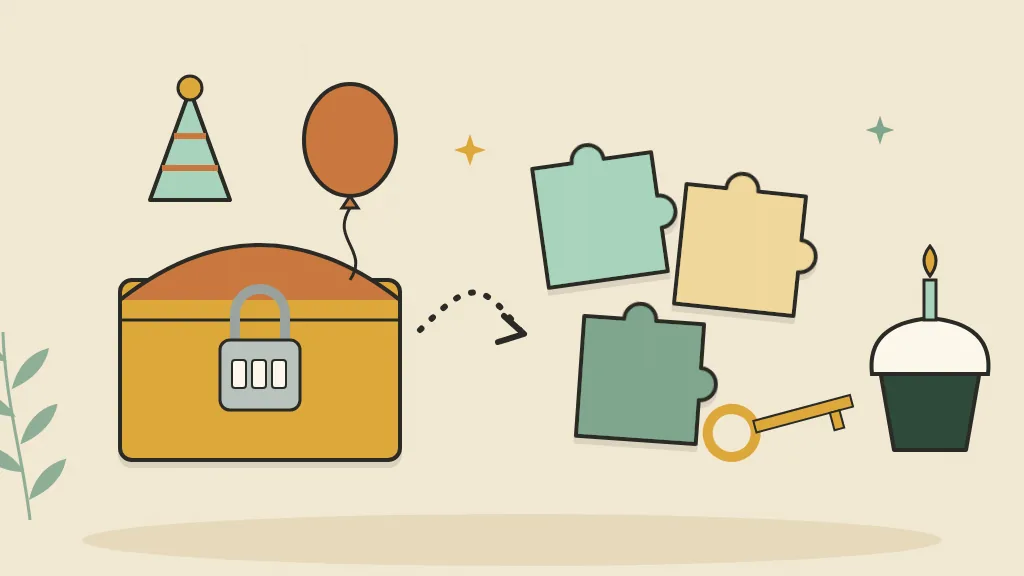
5. Living-room escape-room birthday kits starring the birthday kid: printable puzzles, a story about them and one locked box (a fun beginner project) (speculative)
Why now: If you sell the kit as a personalized printable, Etsy's Help Center lists a $0.20 listing fee per listing (each listing lasts four months) and a 6.5% transaction fee on the order total, plus payment processing, as shown when we checked on Nov 13, 2026.
Sources: Etsy Help: fees for selling on Etsy
Our idea (speculation): Party escape-room printables exist, but they're generic. Yours stars the birthday kid. Parents fill in a short form (name, age, best friend, pet, favorite animal or hobby, two funny facts), and you send back a 45-minute at-home "escape" for 4 to 10 kids: an opening story card read aloud ("Max's birthday cake has been locked away by the sneaky cat, Biscuit..."), six to eight clue cards with puzzles hidden around the living room or backyard, a host guide with where to hide each clue and hints if kids get stuck, and a final code that opens one real combination-lock box with the cake candles or party favors inside. AI helps you write age-right riddles and the story in minutes; you play-test the puzzles. Sell it as a personalized digital kit, with an optional "we pack the box" upgrade for local parents.
Who pays: Parents planning a 6-to-12-year-old's birthday at home, homeschool co-ops and scout troops wanting a party-day activity, grandparents hosting a sleepover, and local party planners who want a fresh add-on.
Start it this weekend: Saturday: write a story and six puzzles for a child you know with free ChatGPT or Gemini (ask for riddles a 7-year-old can solve in under five minutes each), then make the cards in Canva's free plan. Buy one small box and a three-digit combination lock. Sunday: run it with your own kids or a friend's, time it, and fix the puzzle everyone got stuck on. Save the cards as a template so each new order is just new names and facts, then list it on Etsy as a personalized printable or offer it in a local parents' group. Tools: free ChatGPT or Gemini, Canva free, a small box and lock, Etsy ($0.20 per listing plus fees), a few dollars for the box and lock to start.
What could go wrong: Keep clue spots safe (nothing on high shelves, near the stove or in the street) and say so in the host guide. Puzzles that are too hard turn a party into tears; play-test with real kids at each age and always include a hint card. Don't use cartoon, movie or game characters or logos (that's an easy way to get an Etsy listing pulled). Collect only what the story needs from the parent, delete it after the party, and never put a child's full name or photo in your shop's examples without written permission.
Could earn: Soon
The thread connecting today's five
Our take: each idea packages something a family or small business means to get around to (a lost-pet plan, a list of model numbers, a recipe for the kohlrabi, a letter to a grandchild, a party activity) into a finished thing made for one pet, one house, one farm or one child. AI makes the drafting cheap; testing the recipe, checking the model number and play-testing the puzzle is what people pay for. A fast neighborhood search is how most lost dogs got home in the ASPCA's survey, and ENERGY STAR's monthly filter advice assumes you know where the filter is; the gap is in the last mile.
Yesterday's five: 5 new AI business ideas for grandparents, coaches, crews and homeschoolers (Nov 12, 2026). Extra beginner-fun page: 5 fun AI business ideas for total beginners (Nov 6, 2026).
Want proof instead of ideas? Read our verified stories of people who actually got paid with AI, and how we verify them. More ideas: the original 13 AI business ideas from trends and 14 ways to start an AI business with ElevenLabs.